
Why Training ROI Feels So Difficult to Manage in L&D
There is a moment many L&D professionals know too well. The program went well. Participants were engaged. Feedback scores were strong. Then, someone from leadership asks, gently but directly: “So… what was the ROI?”
Hazie Halim
3/12/20264 min read
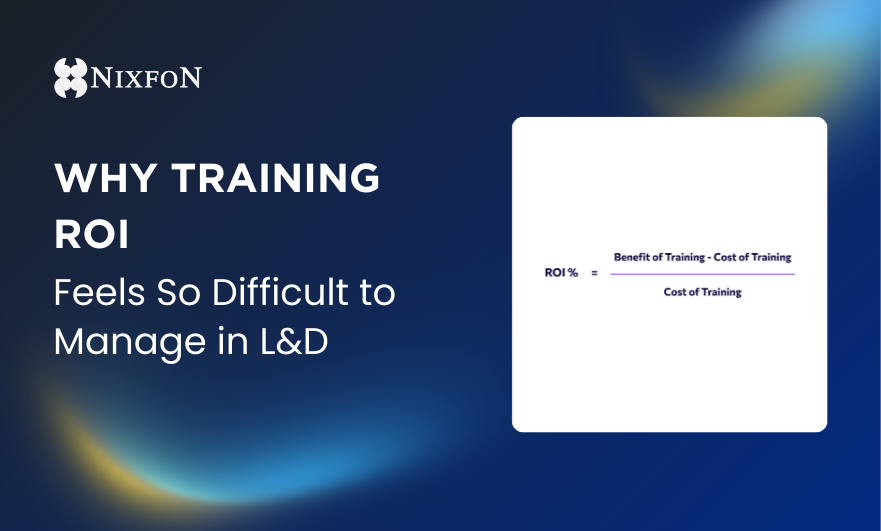
There is a moment many L&D professionals know too well.
The program went well. Participants were engaged. Feedback scores were strong.
Then, someone from leadership asks, gently but directly:
“So… what was the ROI?”
And suddenly, the room feels smaller. Not because the L&D does not care about the impact. But because measuring training ROI is far more complex than it sounds.
Let’s talk honestly about why this remains one of the biggest challenges in L&D and what can be done about it.
Why ROI is Such a Major Problem in L&D
Learning Does Not Operate in Isolation
Business performance is influenced by many viables – market conditions, leadership quality, operational processes, team morale, and economic shifts.
When sales improve after a training program, was it the training? A new pricing strategy? A strong quarter?
Isolating learning impact in a complex ecosystem is not straightforward.
Traditional Metrics Are Easier Than Business Metrics
It is much easier to report on attendance, completion rates, and satisfaction scores. These metrics are accessible and immediate. But they do not answer the question leadership truly cares about: Did this investment change performance?
The gap between activity metrics and business outcomes is where frustration lives.
Misalignment at the Start
Sometimes, ROI becomes difficult because the program was not designed with measurable outcomes in mind. If the initial request was, “can we run a leadership workshop”, without defining, “what leadership behaviour needs to change?”, then measuring return becomes guesswork.
Clarity at the beginning determines clarity at the end.
Emotional Pressure
There is also a human side to this. L&D teams often feel pressure to justify their existence in financial terms. That can create anxiety.
When ROI discussions feel like audits instead of partnerships, defensiveness naturally follows.
But ROI should not feel like a threat. It should feel like shared curiosity.
Practical Solutions to Manage Training ROI More Effectively
The goal is not perfect measurement. The goal is meaningful measurement. Here are practical ways L&D can move forward.
Start with Business Outcomes, Not Content
Before designing a program, ask:
What specific business problem are we addressing?
What behaviour needs to shift?
What metric reflects success?
For example, instead of “communication training”, define “reduce client escalation cases by 15% through improved conflict handling”.
When outcomes are clear, measurement becomes focused.
Establish Baseline Early
Measure current performance before intervention. This could include sales conversion rates, customer satisfaction scores, employee engagement indicators, and error rates.
Without a baseline, improvement cannot be meaningfully assessed.
Track Behaviour Change, Not Just Participation
Introduce simple behaviour indicators:
Are managers conducting regular feedback conversations?
Are sales teams using consultative questioning techniques?
Are escalation response scripts being applied?
Behaviour change is often the bridge between training and performance.
Partner with HR and Business Leaders
ROI is easier when L&D collaborates with HR Analytics team, finance, and department heads. Shared ownership creates shared accountability.
When business leaders help define success metrics, they are more likely to recognise progress.
Use Mixed Measurement Approach
Not everything can or should be reduced to financial ROI. Combine:
Quantitative data (performance metrics)
Qualitative insights (manager observations, employee feedback)
Application tracking (practice sessions, reinforcement activities)
A blended measurement approach paints a fuller picture.
Think in Terms of Contribution, Not Attribution
Instead of typing to prove training was the sole cause of improvement, position it as a contributing factor. For example:
“Following targeted coaching training and process improvements, customer complaints decreased by 12%”
This is honest, realistic, and strategic.
Shift the Narrative
Move from:
“Here’s how many hours we delivered.”
To:
“Here’s how this initiative supported our business objectives”
Language sharpens perception. When L&D speaks the language of performance and impact, conversations change.
Managing training ROI is difficult because learning is human. Humans are complex. Organisations are complex too. But complexity does not mean impossibility.
It simply requires intentional design, alignment, and partnership.
At Nixfon Learning, we often believe that learning should be measured not only by how much was delivered, but by what shifted afterwards.
ROI is not about defending L&D’s existence. It is about demonstrating L&D’s influence.
And perhaps, the deeper shift is this: when L&D designs with outcomes in mind from the beginning, ROI stops feeling like a question asked at the end. It becomes part of the story from the start.
Till we meet again in the next episode!


About the author
Hazie Halim has more than 15 years of experience in Talent Management Solution and L&D Tech. Her approach has never been about the technology; it has always been about the people in the industry. She understands HR & L&D, she understands the pain and the stress, and she understands the fear and reluctance of system integration drama. Combining these has allowed her to be compassionate when sharing her experience and knowledge during project implementation. She is passionate about making the HR & L&D experts look good in front of their stakeholders. Their win is her win.


Unlock a world of thrilling content
Join our newsletter today
Resources


Unit 7.06, Level 7, Amcorp Trade Centre, 18, Persiaran Barat, 46050 Petaling Jaya, Selangor.
Nixfon (M) Sdn Bhd (633379-V)