Uneven Digital Literacy
Digital transformation is a phrase that appears frequently in boardroom conversations. New platforms are introduced, automation tools are implemented, and data dashboards become part of everyday decision-making. On paper, it looks like progress.
Hazie Halim
5/14/20264 min read
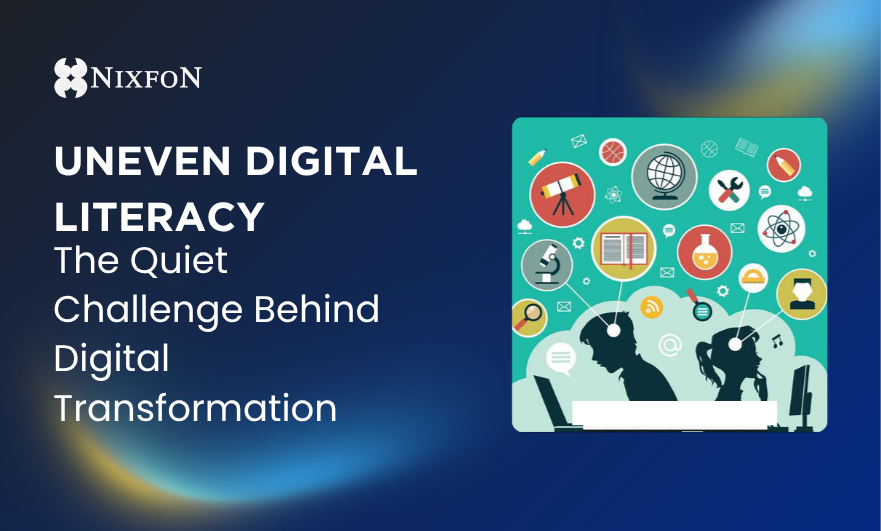
The Quiet Challenge Behind Digital Transformation
Digital transformation is a phrase that appears frequently in boardroom conversations. New platforms are introduced, automation tools are implemented, and data dashboards become part of everyday decision-making. On paper, it looks like progress.
But somewhere in the organisation, two employees are having different experiences.
One is exploring the new tools with curiosity and confidence. The other is quietly wondering if they are the only person who does not fully understand how everything works.
This difference is known as uneven digital literacy, and it is one of the most overlooked challenges for L&D teams today.
Not Everyone Starts at the Same Digital Starting Line
In most organisations, employees fall across a wide spectrum of digital capability. Some are highly comfortable with technology. They experiment with new tools, automate small tasks, and quickly adapt to system updates. Others may still be developing foundational digital habits. They might rely heavily on familiar processes or feel hesitant navigating unfamiliar platforms.
Neither group is “right” or “wrong”. They simply reflect different experiences, roles, and exposure to technology over time. But when organisations adopt new digital systems without recognising this variation, learning challenges emerge.
Why This Creates Complexity for L&D
For L&D professionals, designing digital learning solutions in such environments can feel like walking a careful tightrope.
If the learning program is designed for advanced users, employees with lower digital confidence may feel overwhelmed. If the program starts with basic explanations, digitally fluent employees may disengage quickly.
The results can be familiar – some learners struggle quietly. Some learners rush through the materials. And L&D wonders why engagement and application vary so widely.
Uneven digital literacy means one-size-fits-all learning rarely works. Designing learning that supports everyone requires a more thoughtful approach.
For some employees, digital transformation can trigger anxiety. They may worry about keeping up with change or appearing less capable than their peers. These feelings are rarely expressed openly. Instead, they show up as hesitation, low participation, or resistance to new tools.
When L&D acknowledges these realities with empathy, learning becomes far more effective. After all, people rarely learn well when they feel judged or left behind.
How L&D Can Design Learning That Supports Everyone
The good news is that uneven digital literacy is manageable with intentional planning. Here are several strategies L&D can consider:
1. Establish a Digital Baseline
Before designing learning programs, it helps to understand where employees currently stand. Short surveys, skill assessments, or manager feedback can reveal patterns such as:
Common digital skill gaps
Departments that require additional support
Areas where confidence is lower
This information helps L&D design solutions that reflect reality, not assumptions.
2. Build Foundational Digital Skills First
Advanced tools often require basic digital competence. Simple capabilities like navigating cloud platforms, managing digital files, or interpreting dashboards are foundational. Providing short learning modules that strengthen these basics can significantly boost confidence before introducing more complex technologies.
Sometimes, the most powerful step in digital transformation is building strong fundamentals.
3. Design Layered Learning Paths
Instead of delivering the same content to everyone, consider creating tiered learning pathways. For example:
Introductory digital literacy modules
Intermediate practical applications
Advanced optimisation techniques
This allows learners to progress at their own pace without feeling either overwhelmed or under-challenged.
4. Encourage Peer Learning
In many organisations, digitally confident employees are already helping colleagues informally. L&D can support this by encouraging knowledge sharing through internal learning communities, peer coaching sessions, or short team demonstrations.
Peer learning not only spreads knowledge but also builds confidence and collaboration.
5. Integrate Learning into Daily Work
Digital skills often develop best through application. Providing job aids, quick tutorials, or workflow guides can help employees learn while performing their tasks. Instead of attending long courses, they gain support exactly when they need it.
This approach makes digital learning feel practical rather than overwhelming.
The Strategic Opportunity for L&D
Uneven digital literacy may sound like a challenge, but it also presents an opportunity for L&D to play a more strategic role. By identifying digital capability gaps early and supporting employees through thoughtful learning design, L&D becomes a key enabler of transformation.
Digital initiatives succeed not because new technology exists. They succeed because people feel confident using it.
And confidence grows when learning is supportive, accessible, and aligned with real work challenges.
The role of L&D is not simply to introduce new technology. It is to guide people through the journey of understanding it.
When learning programs acknowledge different starting points and support employees with empathy, uneven digital literacy becomes less of a barrier. And more of a bridge toward a collective growth.
How Nixfon Learning Supports Digital Literacy Strategy
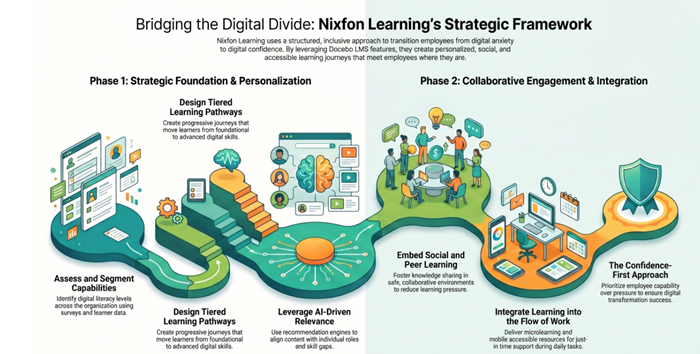
At Nixfon Learning, we understand that digital literacy is not simply about teaching people how to use tools. It is about building confidence, reducing anxiety, and creating a learning experience that meets employees where they are.
With the support of Docebo LMS, we help organisations design digital learning environments that are structured, inclusive, and adaptable to different levels of capability.
We recognise that digital transformation succeeds when people feel capable, not pressured.
At Nixfon Learning, we combine thoughtful strategy with Docebo’s platform capabilities to help organisations turn uneven digital literacy into a structured and supported journey, where every employee, regardless of starting point, can grow with confidence.
Till we meet in the next episode!
About the author
Hazie Halim has more than 15 years of experience in Talent Management Solution and L&D Tech. Her approach has never been about the technology; it has always been about the people in the industry. She understands HR & L&D, she understands the pain and the stress, and she understands the fear and reluctance of system integration drama. Combining these has allowed her to be compassionate when sharing her experience and knowledge during project implementation. She is passionate about making the HR & L&D experts look good in front of their stakeholders. Their win is her win.


Unlock a world of thrilling content
Join our newsletter today
Resources


Unit 7.06, Level 7, Amcorp Trade Centre, 18, Persiaran Barat, 46050 Petaling Jaya, Selangor.
Nixfon (M) Sdn Bhd (633379-V)