The Hidden Work Behind LMS Implementation That Many Organisations Underestimate
When organisations decide to implement a new Learning Management System (LMS), the initial conversations often focus on the platform itself. Which feature does it offer? How intuitive is the interface? How quickly can it be launched?
Hazie Halim
4/9/20265 min read
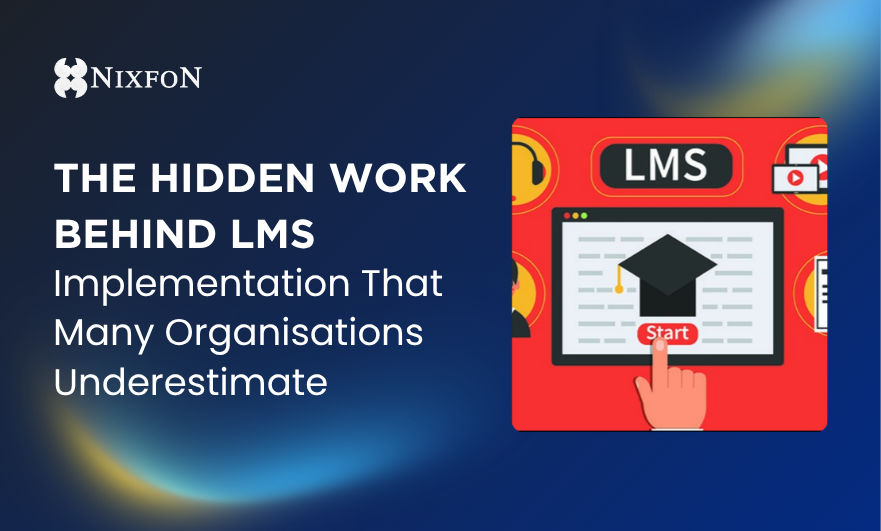
When organisations decide to implement a new Learning Management System (LMS), the initial conversations often focus on the platform itself.
Which feature does it offer?
How intuitive is the interface?
How quickly can it be launched?
These are important questions. Modern LMS and learning experience platforms have become powerful tools for supporting workforce development and creating engaging learning environments.
However, many organisations discover something surprising during implementation: the technology is often the easiest part. What truly shapes the success of an LMS implementation is the work that happens behind the scenes. These efforts may not always be visible in the project timelines, yet they play a crucial role in ensuring the platform launches smoothly and delivers values to the learners.
Understanding this hidden work can help organisations prepare more realistically and navigate the journey with greater confidence.
Content Preparation: More Than Uploading Courses
One of the most underestimated tasks during LMS implementation is preparing learning content.
At first glance, it may seem straightforward. Existing courses simply need to be uploaded into the new system. In reality, content preparation often involves thoughtful review and refinement.
Many organisations discover that their current learning materials are spread across multiple platforms, shared drives, and folders with names that made perfect sense five years ago but are now slightly mysterious. Implementation becomes an opportunity to pause and ask these questions: which content is still relevant? Which courses need updating? How should learning be organised for easier discovery?
Rather than migrating everything at once, organisations often benefit from curating content and structuring it into clear learning pathways. This ensures that when learners enter the platform, they encounter meaningful and well-organised resources rather than an overwhelming catalogue.
Data Cleansing: Tidying the Digital House
Another task that rarely receives early attention is data preparation.
An LMS relies on accurate user data to assign learning, generate reports, and personalise experiences. During implementation, organisations frequently discover that employee data may require some cleaning before it can be integrated into the new platform. This might involve reviewing department structures, job titles and roles, user groups and reporting lines, and historical training records.
Think of it as tidying the digital house before inviting guests over. The clearer the data structure, the smoother the platform operates once learners begin using it. While data cleansing may not be the most glamorous part of the project, it quietly ensures the system functions reliably from day one.
Stakeholder Coordination: Aligning Many Voices
LMS implementation rarely involves just one team.
HR, L&D, IT, business leaders, and sometimes compliance teams all have important perspectives and expectations. Each group interacts with learning differently, and their priorities may vary. One of the hidden but essential tasks during implementation is bringing these perspectives together.
Stakeholder coordination ensures that decisions about platform configuration, learning structure, and reporting align with organisational goals. Without this alignment, implementation can quickly slow down as teams revisit decisions or clarify expectations.
Clear roles, regular communication, and shared project ownership help keep the journey collaborative and focused.
Change Communication: Preparing Learners for the New Experience
Even the most thoughtfully configured LMS cannot succeed if learners are unsure why it exists.
Introducing a new learning platform represents a small but meaningful change in how employees access development opportunities. Without clear communication, employees may see the system as simply another tool they are required to use.
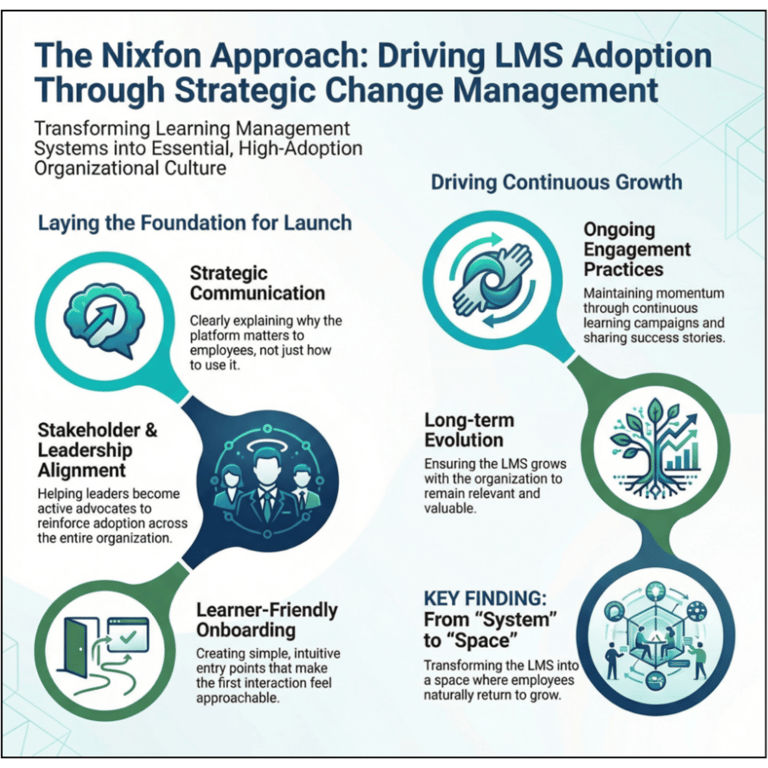
A strategic communication plan helps shift this perception. Organisations can explain why the new LMS is being introduced, how it supports employee growth, what learners can expect from the new experience, and how to begin exploring the new platform.
When learners understand the purpose behind the platform, they approach it with curiosity rather than hesitation. Sometimes, a simple message such as "this platform was designed to support your learning journey” can make a meaningful difference.
Governance Setup: Ensuring Long-Term Sustainability
An LMS launch is not the end of the journey. In many ways, it is the beginning.
Without clear governance, platforms can quickly become disorganised as new courses are added, requests emerge from different departments, and learning priorities evolve. Governance helps establish structure by defining:
Who owns the platform
How new content is approved
Who manages system updates
How learning priorities are determined
When governance is clear, the LMS remains organised and aligned with organisational goals. Without it, even the most well-designed system can slowly drift into confusion. In many successful organisations, governance act as the quiet guide that keeps the learning ecosystem healthy and sustainable.
The Work That Makes the Difference
LMS implementation is often described as a technology project, but in reality, it is much more than that.
It involves content, organising data, aligning stakeholders, communicating change, and establish governance structures that will support the platform long after launch. These tasks may not always appear in the spotlight, yet they are the elements that transform an LMS from a simple system into a meaningful learning environment.
With thoughtful preparation and realistic understanding of what happens behind the scenes, organisations can approach implementation with greater clarity and confidence. And occasionally, with a little patience, and a sense of humour when opening a folder named “Final_Final_V3”.
Because behind every successful LMS launch is a team that quietly did the work that made everything else possible.
How Nixfon Learning Supports the Work Behind the Scenes
At Nixfon Learning, we understand that LMS implementation is rarely as simple as it first appears. Beyond the platform itself lies a layer of hidden work that often determines whether the system succeeds or struggles after launch.
We have seen how content restructuring, data preparation, stakeholder alignment, and governance decisions can surface unexpected complexities along the way. These moments are not signs of failure, but a natural part of building a learning ecosystem that truly works.
Our role is to support organisations through these surprises with a steady, structured, and thoughtful approach. We do this by:
We recognise that implementation is not always a straight path. There will be moments of adjustment, unexpected questions, and evolving priorities. With the right partner, these become manageable steps rather than obstacles.
At Nixfon Learning, we walk alongside organisations throughout this journey, ensuring that the work behind the scenes is not only handled, but handled thoughtfully.
Because when the hidden work is done well, everything else feels seamless.
Till we meet again in the next episode!
About the author
Hazie Halim has more than 15 years of experience in Talent Management Solution and L&D Tech. Her approach has never been about the technology; it has always been about the people in the industry. She understands HR & L&D, she understands the pain and the stress, and she understands the fear and reluctance of system integration drama. Combining these has allowed her to be compassionate when sharing her experience and knowledge during project implementation. She is passionate about making the HR & L&D experts look good in front of their stakeholders. Their win is her win.


Unlock a world of thrilling content
Join our newsletter today
Resources


Unit 7.06, Level 7, Amcorp Trade Centre, 18, Persiaran Barat, 46050 Petaling Jaya, Selangor.
Nixfon (M) Sdn Bhd (633379-V)