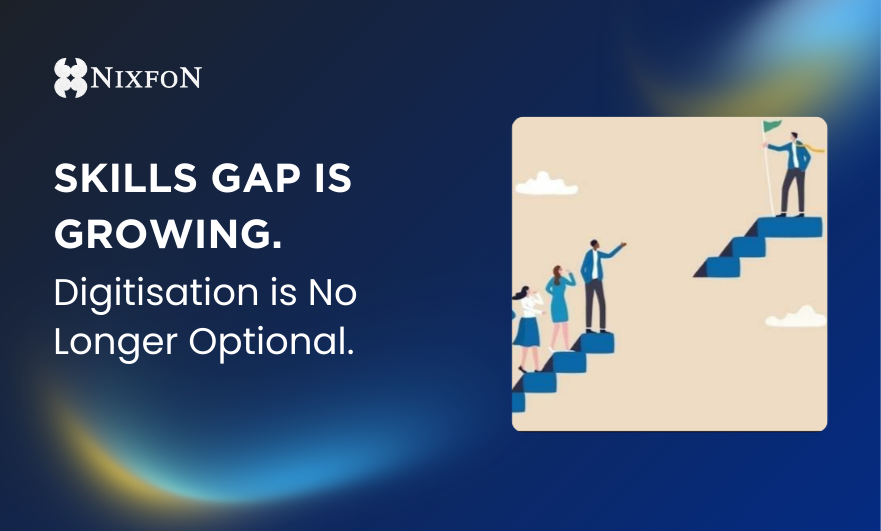
Skills Gap is Growing. Digitisation is No Longer Optional.
Somewhere around the globe right now, a hiring manager is saying the same sentence many others are saying: “We can’t find the right talent.” And somewhere else, an employee is thinking: “I don’t feel ready for what my job now requires.”
Hazie Halim
3/17/20263 min read
Somewhere around the globe right now, a hiring manager is saying the same sentence many others are saying:
“We can’t find the right talent.”
And somewhere else, an employee is thinking:
“I don’t feel ready for what my job now requires.”
That tension is the skills gap. And for L&D professionals around the world, it is not an abstract concept. It is a daily pressure.
The Problem Statement for L&D Professionals
Many countries are accelerating rapidly toward a digital economy. Automation, AI adoption, data-driven decision-making, and digital platforms are becoming standard across industries.
But capability is not growing at the same speed.
Here are some of the real challenges L&D teams are facing:
Rapid Technology Change
Digital tools are evolving faster than training cycles. By the time a curriculum is designed, approved, and rolled out, the technology may have already shifted. Traditional training timelines struggle to keep up.
Uneven Digital Literacy
Not every employee starts from the same baseline. Some are digitally fluent. Others are still navigating basic digital workflows. This creates complexity in designing learning that supports everyone without overwhelming anyone.
Limited Budget and Resources
Many L&D teams operate lean. They are expected to reskill employees, support digital transformation, improve leadership capability, and demonstrate ROI. All with tight budgets and limited headcount. Digitisation feels necessary but daunting.
Business Expectations are Rising
Leadership increasingly expects L&D to anticipate future skills, enable agility, support innovation, and contribute directly to performance. This requires shift from reactive training delivery to proactive capability strategy. And that shift requires digital maturity.
Why Digitisation is Part of the Solution
Digitisation in L&D is not about replacing humans with systems. It is about creating scalable, responsive, and data-informed learning ecosystems. Done well, digitisation allows L&D to deliver learning faster, personalise development pathways, track capability progression, and connect learning to business outcomes. It supports continuous learning instead of one-off events.
But digitisation without strategy simply adds complexity. The real opportunity lies in intentional transformation.
Practical Solutions for L&D Professionals
If the skills gap is overwhelming, here are practical, grounded steps to move forward:
Conduct a Skills Mapping Exercise
Before digitising everything, clarify what matters. Identify:
- Critical future skills for your industry
- Current capability gaps
- High-risk roles vulnerable to automation
This shifts L&D from general training to targeted reskilling.
Adopt a Blended Learning Approach
Digitisation does not mean abandoning human interaction. Combine digital microlearning, virtual simulations, peer learning, and coaching conversations. This creates flexibility while preserving human connection.
Invest in Digital Literacy
Before advanced tech training, ensure foundational digital competency. Basic skills such as data interpretation, digital collaboration tools, and cyber awareness build confidence and reduce resistances to further transformation.
Upskill the L&D Team
L&D cannot drive digitisation without digital capability. Key areas to strengthen include data analytics literacy, digital content creation, prompt engineering, and learning technology integration. When L&D becomes digitally confident, influence grows.
Leverage Data to Inform Strategy
Use digital platforms to gather insights on learning engagement, skill progression, and performance trends. This allows L&D to prioritise interventions based on evidence, not assumptions. Data becomes a compass, not just a report.
Partner With Business Leaders
Digitisation should not be an isolated L&D initiative. Work closely with HR, IT, and department heads. Align learning initiatives with digital transformation roadmaps. Shared ownership reduces resistance and increases impact.
Behind every skills gap statistic is a person. An employee unsure about automation. A manager struggling to lead in a digital environment. An L&D practitioner balancing ambition with limited resources.
Empathy matters. Digitisation should feel like empowerment, not replacement. When positioned correctly, it becomes a bridge to opportunity.
At Nixfon Learning, we believe digitisation is not about chasing trends. It is about preparing people for meaningful participation in a changing economy.
The skills gap will not close overnight. But with thoughtful digitisation, strategic alignment, and human-centered design, L&D can lead the way. Not reactively, but intentionally.
Till we meet again in the next episode!


About the author
Hazie Halim has more than 15 years of experience in Talent Management Solution and L&D Tech. Her approach has never been about the technology; it has always been about the people in the industry. She understands HR & L&D, she understands the pain and the stress, and she understands the fear and reluctance of system integration drama. Combining these has allowed her to be compassionate when sharing her experience and knowledge during project implementation. She is passionate about making the HR & L&D experts look good in front of their stakeholders. Their win is her win.


Unlock a world of thrilling content
Join our newsletter today
Resources


Unit 7.06, Level 7, Amcorp Trade Centre, 18, Persiaran Barat, 46050 Petaling Jaya, Selangor.
Nixfon (M) Sdn Bhd (633379-V)