
Prompt Engineering in L&D – Is It Worth Learning?
Once upon a time, an L&D professional sat quietly mastering PowerPoint animations for his next training session. Then, he started mastering LMS administration. Then, came instructional design tools.
Hazie Halim
2/26/20264 min read
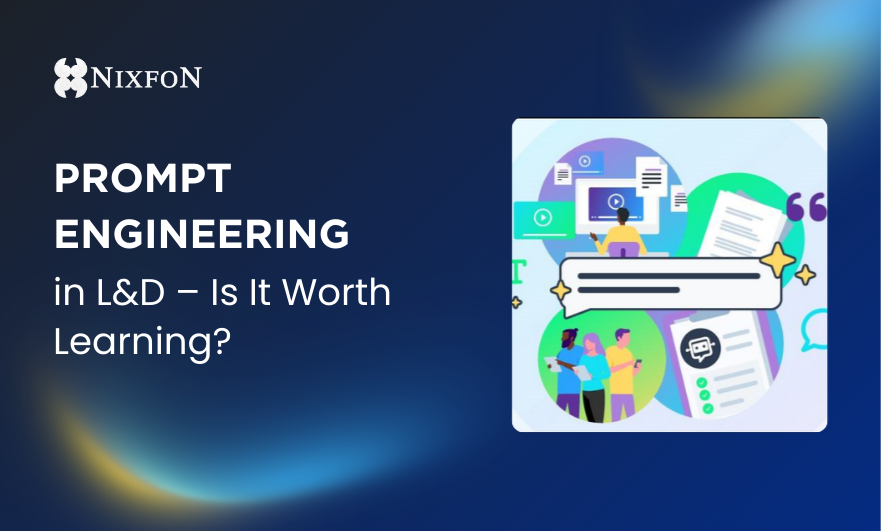
Once upon a time, an L&D professional sat quietly mastering PowerPoint animations for his next training session. Then, he started mastering LMS administration. Then, came instructional design tools.
Now, someone in a meeting says, “Have you tried prompt engineering?”
Half the room nods confidently. The other half Googles it under the table.
Is prompt engineering just another shiny skill? Or is it quietly becoming part of the modern L&D toolkit?
First, what is prompt engineering? Sounds technical, almost intimidating, isn’t it. Well, in simple terms, it is the skill of giving clear, structured instructions to AI tools so that they produce useful, relevant, and high-quality outputs.
Instead of typing: “Create training content on leadership”, you learn to say: “Create a 30-minute interactive leadership module focused on coaching conversations for mid-level managers in a manufacturing company, include realistic scenarios and reflection questions.
The difference is not the AI. It is the clarity of thinking behind the instructions. Prompt engineering is less about talking to machines, it is more about thinking clearly.
AI tools are now part of daily workflows. Content drafting, scenario creation, quiz generation, video scripts, case studies, etc. Without structured prompting, you get generic output. With intentional prompting, you get tailored, usable, and time-saving results. For L&D teams under pressure to produce faster, adapt quicker, and personalise learning, this matters. But here is the deeper reason.
Prompt engineering forces L&D professionals to articulate:
The learning objective
The audience context
The behavioural outcome
The business alignment
If you cannot write a clear prompt, you likely have not clarified the learning need. In that sense, prompt engineering is strategy disguised as syntax.
The Strategic Value for L&D
This is where the conversation shifts from tactical to strategy:
Faster prototyping, smarter conversations
Instead of spending weeks building a draft module before stakeholder review, you can generate structured outline in minutes. This allows earlier feedback, faster iteration, and more collaborative design. Speed becomes an advantage, not a compromise.
Enhanced Personalisation
AI tools can help tailor content for different roles, levels, or functions. With the right prompts, you can adapt a leadership scenario for frontline supervisors or senior executives without rebuilding everything from scratch. That flexibility strengthens L&D’s ability to respond to business nuances.
Better Data Interpretation
Prompt engineering is not only about content creation. It can support:
Analysing feedback trends
Summarising learning insights
Translating survey data into executive-ready language
When L&D can convert raw data into clear narratives quickly, strategic credibility increases.
From Content Creator to Capability Architect
When operational tasks become more efficient, L&D gains time. Time to consult, time to align with the business people, and time to measure impact. Prompt engineering is not the strategy itself, but it frees cognitive space to focus on strategy.
So, is prompt engineering worth learning? Short answer is, yes. Longer answer, only if treat it as a thinking skill, not a shortcut.
If prompt engineering becomes a way to mass-produce generic content, it dilutes quickly. If it becomes a discipline of clarity, structure, and alignment, it elevates your practice.
The value lies in how you use it.
Where L&D Practitioners Learn Prompt Engineering?
The good news is you don’t need a computer science degree.
Free Options:
Platform documentation and help centres of AI tools you already use. Many provide practical prompting guides.
YouTube tutorials from experienced instructional designers and AI practitioners
LinkedIn thought leaders sharing real prompt examples for learning design
Open online resources or platforms like Coursera and edX offering introductory AI and prompt writing courses
Start small, experiment, and refine. Prompt engineering improves through practice, not theory.
Paid Options:
Structured AI courses on Udemy and LinkedIn Learning that focus on applied prompting
Specialised AI certification programs designed for business professionals
Corporate workshops tailored to L&D teams exploring AI integration
Choose based on depth needed, not hype level.
Prompt engineering will not replace instructional design expertise. It will not replace human facilitation. It will not replace empathy. But it will reward those who understand how to collaborate with intelligent tools.
At Nixfon Learning, we often say that learning should be human-centered, even as technology evolves. Prompt engineering is not about surrendering to machines. It is about sharpening how we think. Because in L&D, the quality of our questions has always shaped the quality of our impact.
And that skill, is definitely worth learning.
Till we meet again in the next episode!
Why It Is Becoming Important to L&D


About the author
Hazie Halim has more than 15 years of experience in Talent Management Solution and L&D Tech. Her approach has never been about the technology; it has always been about the people in the industry. She understands HR & L&D, she understands the pain and the stress, and she understands the fear and reluctance of system integration drama. Combining these has allowed her to be compassionate when sharing her experience and knowledge during project implementation. She is passionate about making the HR & L&D experts look good in front of their stakeholders. Their win is her win.


Unlock a world of thrilling content
Join our newsletter today
Resources


Unit 7.06, Level 7, Amcorp Trade Centre, 18, Persiaran Barat, 46050 Petaling Jaya, Selangor.
Nixfon (M) Sdn Bhd (633379-V)