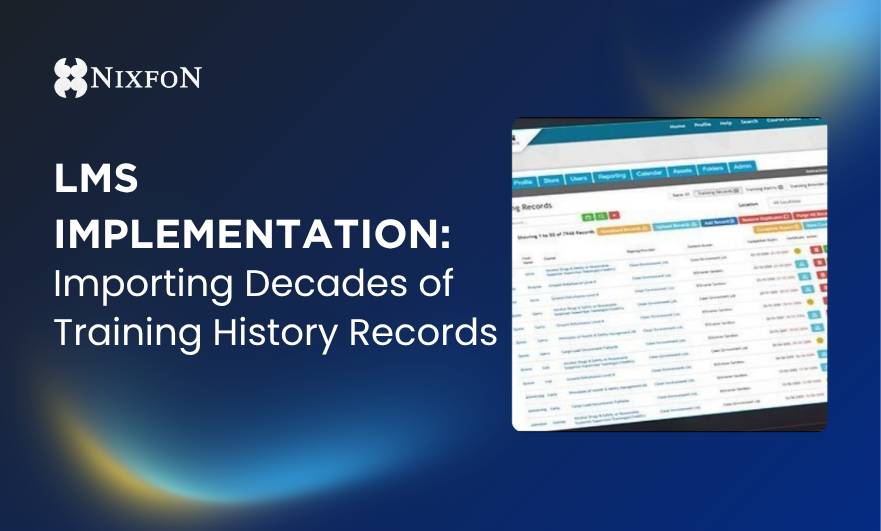
LMS Implementation: Importing Decades of Training History Records
During LMS implementation projects, there is a moment that appears in almost every conversation. Someone gently asks, “Should we import all our historical training records into the new system?” Then another voice adds, usually with admirable ambition: “Yes, we should bring everything. All the records.”
Hazie Halim
4/28/20264 min read
During LMS implementation projects, there is a moment that appears in almost every conversation. Someone gently asks, “Should we import all our historical training records into the new system?” Then another voice adds, usually with admirable ambition: “Yes, we should bring everything. All the records.”
This is often followed by a quiet pause as the team collectively realises that “everything” might include training records from 10, 15, or even 20 years ago.
While the intention behind this request is understandable, importing decades of historical training data is rarely necessary. In fact, doing so can create unnecessary complications during implementation and may not provide meaningful value to learners or the organisation.
A more thoughtful approach can help organisations preserve what matters while keeping the new learning environment clear and purposeful.
Why Importing Decades of History Is Often Unnecessary
Historical training records certainly have their place. They document compliance history, professional development activities, and organisational learning over time. However, not all historical records are equally relevant in a modern learning environment.
When employees log into a newly launched LMS, their primary focus is usually on current development opportunities. They want to discover new skills, explore learning pathways, or complete programmes related to their current role. Records from training sessions completed many years ago rarely influence these experiences.
For example, while it may be interesting to know that someone attended a workshop in 2011, that information is unlikely to affect their current learning journey. As a result, importing large volumes of historical records often adds complexity without providing meaningful value.
Implementation Implications
From a technical perspective, importing decades of training data can significantly affect the implementation process. Large datasets require additional effort to prepare, cleanse, validate, and test before they can be successfully migrated into a new system. This may involve reviewing old spreadsheets, reconciling incomplete records, and ensuring that historical course structures match the new LMS configuration. Sometimes, the original course titles or categories no longer exist, which introduces additional mapping challenges.
All of this work can extend implementation timelines without directly improving the learner experience.
In many cases, teams find themselves spending considerable time preparing data that will rarely be viewed once the platform is live. While historical data may seem important during implementation, its long-term impact on the learning is often minimal.
Implications for Learners
There is also an important learner experience consideration. When historical records from many years are imported into the LMS, learner transcripts can become crowded with outdated entries. A profile intended to highlight development progress may instead resemble an archive of past activities.
For learners, this can make it harder to focus on current goals and meaningful learning opportunities.
A streamlined transcript that highlights recent achievements and relevant certifications tends to be far more helpful. After all, most employees are more interested in where their learning is heading, rather than revisiting a compliance session they attended during a different role in a different department many years ago.
Planning a Strategic Approach to Data Import
Rather than importing everything, L&D teams can take a strategic approach to determining which historical records should be included in the new LMS. Several considerations can help guide this decision:
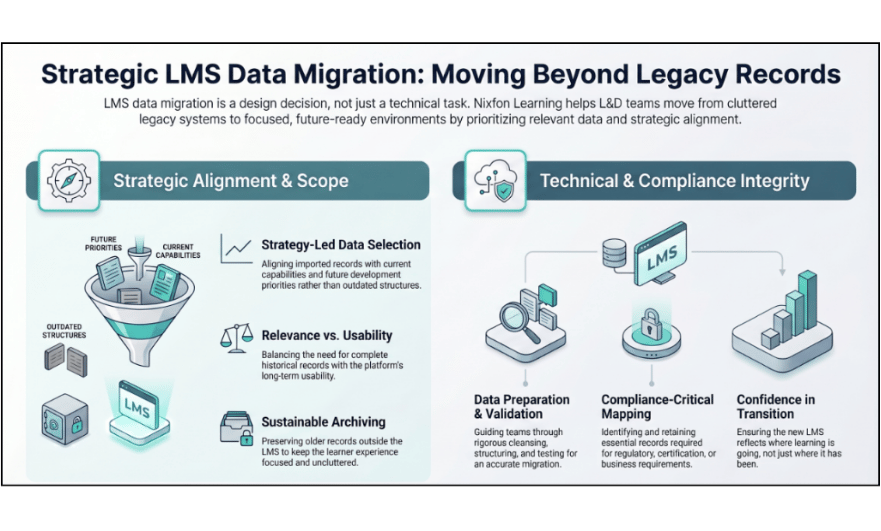
Focus on relevant timeframes - Many organisations choose to import records from the past 3 to 5 years. This timeframe often captures the most relevant learning history while keeping transcripts manageable.
Prioritise critical certifications – Certain compliance records, licenses, or regulatory training may need to be retained regardless of age. These should be identified early and carefully mapped during integration.
Maintain historical archives externally if needed – Older records can still be stored securely outside the LMS for reference or audit purposes. This ensures the information is preserved without cluttering the active learning platform.
Align data with the future learning strategy – The LMS should support where learning is going, not simply document where it has been. By focusing on relevant and meaningful records, organisations can ensure that the system reflects current development priorities rather than historical accumulation.
A Fresh Start for Learning
Launching a new LMS offers organisations a valuable opportunity to reset how learning is organised and experienced. Instead of carrying forward every piece of historical data, implementation teams can thoughtfully select the records that truly support learners and organisational goals.
Sometimes, the most strategic decision during implementation is choosing what not to migrate. After all, an LMS should feel like a forward-looking learning environment, not a museum of training sessions past.
And while it may be interesting to discover that someone completed “Advanced Spreadsheet Skills – Version 2008”, the real value of the platform lies in helping them develop the capabilities they need for tomorrow.
How Nixfon Learning Supports a Strategic Approach to Training History Migration
At Nixfon Learning, we understand that decisions around historical training data are often more complex than they first appear. While it may seem reassuring to bring everything into a new LMS, we know that a thoughtful, strategic approach creates far greater long-term value for both learners and the organisation.
Importing training history is not simply a technical exercise. It is a design decision that shapes how learners view their development, how data is interpreted, and how the platform supports future growth.
We work closely with L&D teams to guide these decisions with clarity and purpose. Our support includes:
We recognise that letting go of historical data can feel uncomfortable. However, when approached strategically, it allows organisations to create a cleaner, more focused learning environment that better serves today’s needs.
At Nixfon Learning, we help L&D teams make these decisions with confidence, ensuring that the LMS reflects not just where learning has been, but where it is going.
Till we meet again in the next episode!
About the author
Hazie Halim has more than 15 years of experience in Talent Management Solution and L&D Tech. Her approach has never been about the technology; it has always been about the people in the industry. She understands HR & L&D, she understands the pain and the stress, and she understands the fear and reluctance of system integration drama. Combining these has allowed her to be compassionate when sharing her experience and knowledge during project implementation. She is passionate about making the HR & L&D experts look good in front of their stakeholders. Their win is her win.


Unlock a world of thrilling content
Join our newsletter today
Resources


Unit 7.06, Level 7, Amcorp Trade Centre, 18, Persiaran Barat, 46050 Petaling Jaya, Selangor.
Nixfon (M) Sdn Bhd (633379-V)