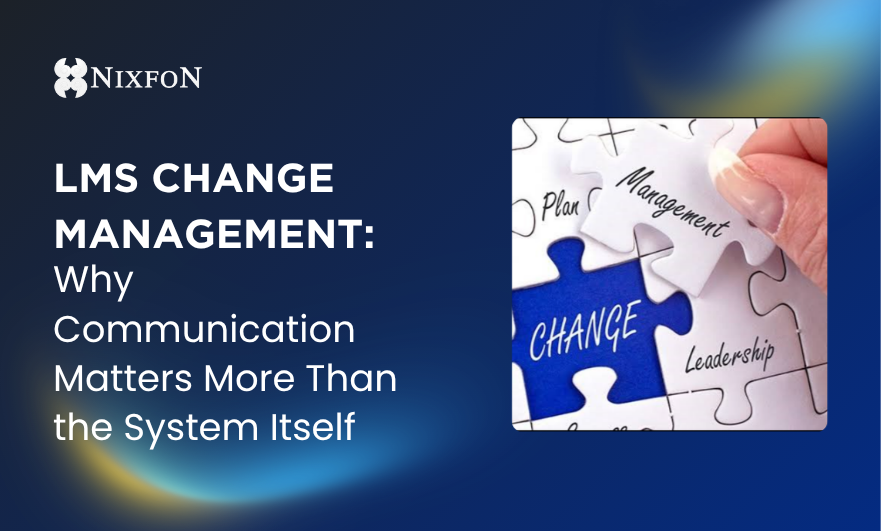
LMS Change Management: Why Communication Matters More Than the System Itself
When organisations implement a new Learning Management System (LMS), much attention is often placed on the technology itself. Teams focus on platform configuration, integrations, course migration, and reporting capabilities. All of these are important steps. Yet many LMS projects encounter an unexpected challenge after launch: low adoption.
Hazie Halim
4/7/20265 min read
When organisations implement a new Learning Management System (LMS), much attention is often placed on the technology itself. Teams focus on platform configuration, integrations, course migration, and reporting capabilities. All of these are important steps. Yet many LMS projects encounter an unexpected challenge after launch: low adoption.
Employees may not log in regularly, managers may not encourage their teams to use the system, and learners may see the platform as just another tool rather than a helpful resource.
In most cases, the issue is not the system. It is the absence of a thoughtful change management and communication strategy.
A new LMS represents more than a technology deployment. It introduces a new way for employees to access knowledge, develop skills, and engage with learning. Without the right communication plan, even the best platform can struggle to gain traction.
This is why change management is one of the most important aspects of any successful LMS implementation.
Why Communication Matters When Launching a New LMS
For employees, the arrival of a new system often raises simple but important questions:
Why are we introducing this platform?
How will it help me in my role?
Is this just another mandatory system?
What is expected from me?
If these questions remain unanswered, learners may approach the platform with hesitation or indifference.
A clear communication plan helps shape how employees perceive the new LMS from the very beginning. Instead of seeing it as an administrative requirement, they begin to understand its purpose as a tool that supports their growth and development.
Communication provides context. It connects the system to the organisation’s learning vision and helps employees see the platform as something designed for them rather than imposed on them.
Helping Learners Understand the Value
One of the most effective ways to encourage adoption is to clearly explain how the LMS benefits the learner. Employees are more likely to engage with a learning platform when they see how it can support their everyday work and long-term development.
A well-designed communication plan can highlight how the new platform will:
Provide easier access to relevant learning resources
Offer personalised learning pathways aligned with career development
Allow employees to learn at their own pace and convenience
Support skills development for future roles and opportunities
When learners understand these benefits, the platform shifts from being perceived as a system to becoming a personal development resource. This perspective is essential for long-term engagement.
Why L&D Must Lead Strategic Change Management
Launching a new LMS is not simply a technology rollout. It is a cultural moment that influences how learning is perceived within the organisation. Because of this, L&D teams play an important role in shaping the narrative around the platform.
Strategic change management allows L&D to guide employees through the transition in a thoughtful and supportive way. Instead of surprising employees with a sudden system launch, L&D can prepare the organisation through clear messaging, stakeholder alignment, and gradual engagement.
This approach helps build trust and curiosity around the new learning environment. When change is introduced thoughtfully, employees are far more likely to explore the platform and integrate learning into their routines.
Key Elements of an Effective LMS Communication Plan
A strong communication strategy does not require overly complex campaigns. What matters most is clarity, consistency, and empathy for the learner’s perspective. Several elements can help support a successful LMS launch:
Early Awareness
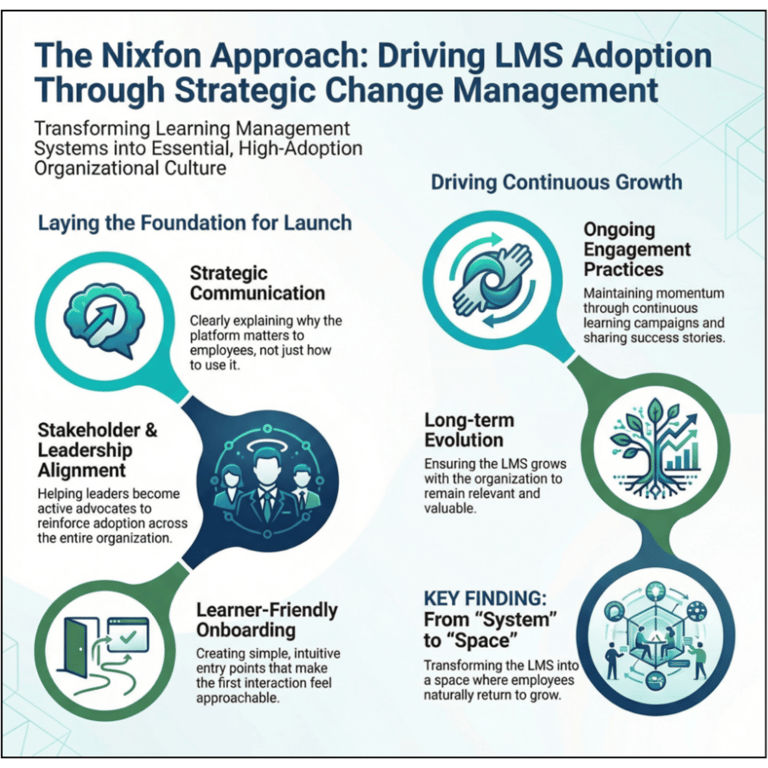
Communication should begin well before the system goes live. Early announcements help employees understand that a new learning platform is coming and why the organisation is investing in it. This stage creates anticipation rather than surprise.
Clear Messaging Around Purpose
Employees should understand the broader vision behind the platform. Is the organisation strengthening leadership development? Supporting digital skills? Encouraging continuous learning? Connecting the LMS to organisational goals helps learners see its relevance.
Practical Guidance for Learners
Learners should receive simple guidance on how to start using the platform. Short walkthrough videos, quick start guides, or introductory sessions can make the first experience far less intimidating. When the first reaction feels easy, adoption tends to grow naturally.
Leadership Support
When leaders and managers actively encourage the use of the LMS, employees are more likely to view learning as a meaningful part of their work. Leadership messaging can reinforce the importance of learning and signal that development is valued within the organisation.
Ongoing Engagement
Communication should not stop after launch. Continuous reminders, learning highlights, and success stories help maintain momentum and encourage employees to revisit the platform regularly. Over time, the LMS becomes integrated into the rhythm of everyday work.
Creating a Positive Learning Experience
A successful LMS implementation is ultimately measured by one simple outcome: whether people choose to use it.
Technology alone cannot achieve this. Adoption grows when learners feel supported, informed, and motivated to explore the platform. Through thoughtful change management and strategic communication, organisations can create a positive introduction to their learning ecosystem. Employees begin to see the platform not as an obligation, but as an opportunity to grow.
When this happens, the LMS becomes more than a system. It becomes a space where knowledge, curiosity, and development come together to support both individual and organisational progress.
And that is where the real value of a learning platform truly begins.
How Nixfon Learning Supports Change Management for LMS Success
At Nixfon Learning, we recognise that the success of an LMS is not defined by its features, but by how people experience and adopt it. This is why change management is at the heart of every implementation we support.
We understand that introducing a new learning platform is a shift in behaviour, mindset, and culture. Without the right guidance, even the most well-configured system can remain underutilised. With the right approach, however, it can become a natural part of how people learn and grow at work.
Our role is to help organisations navigate this transition with clarity and confidence.
We believe that change management is not a one-time activity, but an ongoing journey. When done thoughtfully, it transforms an LMS from a system employees are introduced to into a space they naturally return to.
And that is when learning truly becomes part of everyday work.
Till we meet again in the next episode!
About the author
Hazie Halim has more than 15 years of experience in Talent Management Solution and L&D Tech. Her approach has never been about the technology; it has always been about the people in the industry. She understands HR & L&D, she understands the pain and the stress, and she understands the fear and reluctance of system integration drama. Combining these has allowed her to be compassionate when sharing her experience and knowledge during project implementation. She is passionate about making the HR & L&D experts look good in front of their stakeholders. Their win is her win.


Unlock a world of thrilling content
Join our newsletter today
Resources

Unit 7.06, Level 7, Amcorp Trade Centre, 18, Persiaran Barat, 46050 Petaling Jaya, Selangor.
Nixfon (M) Sdn Bhd (633379-V)