LMS API Integration: What L&D Needs to Know (Without Becoming Technical Experts)
When organisations implement a Learning Management System (LMS), the conversation often turns to integration. The LMS needs to connect with HR systems, user data should sync automatically, and learning records may need to flow into reporting tools. At this point, a new term usually enters the discussion: API integration.
Hazie Halim
5/5/20264 min read
When organisations implement a Learning Management System (LMS), the conversation often turns to integration. The LMS needs to connect with HR systems, user data should sync automatically, and learning records may need to flow into reporting tools. At this point, a new term usually enters the discussion: API integration.
For many L&D teams, this can feel like stepping into an unfamiliar territory. This terminology sounds technical, and the conversations often involve system architecture and data flows.
The good news is that L&D does not need to become technical experts. However, having a clear and simple understanding of API integration can make a significant difference during implementation.
What is API Integration?
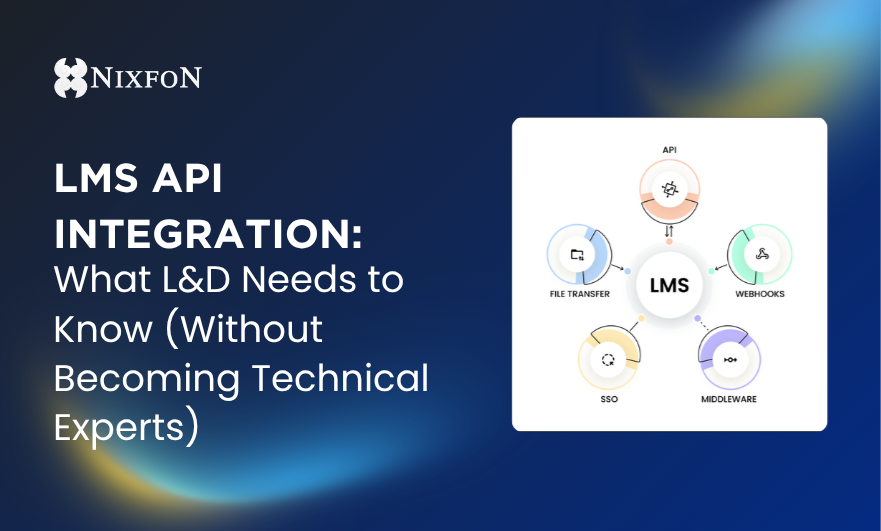
At its simplest, an API (Application Programming Interface) allows two systems to communicate with each other.
Think of it as a messenger between systems. Instead of manually transferring data from one platform to another, APIs allow systems to exchange information automatically. For example, an HR system sends employee data to the LMS, the LMS updates user roles and learning assignments, and learning completion data flows into reporting or talent systems.
Without APIs, much of this work would require manual updates, which can be time-consuming and prone to error. With APIs, these processes can happen seamlessly in the background.
Why API Integration Matters
API integration plays an important role in creating a connected learning ecosystem. When systems are integrated effectively, organisations benefit in several ways:
Reduced manual work
User accounts, roles, and organisational structures can be updated automatically, reducing administrative effort.
Improved data accuracy
Automated data flows minimise the risk of errors caused by manual entry.
Better learner experience
Learners can access the LMS more easily, often through single sign-on (SSO), and receive relevant learning based on their role.
Stronger reporting and insights
Learning data can be combined with other business data, allowing organisations to gain deeper insights into workforce development.
In many ways, API integration helps ensure that the LMS does not operate in isolation, but as part of a broader organisational system.
What L&D Needs to Understand
While the technical setup is typically handled by IT teams or vendors, L&D plays an important role in defining what the integration should achieve. To do this effectively, L&D teams should have clarity on a few key areas:
When should data be updated?
Some organisations require real-time updates, while others may prefer daily or scheduled updates.
What should happen with learning data?
Should completion records remain in the LMS, or be shared with HR or performance system?
What is the learner experience?
Will users log in separately, or access the LMS through single sign-on?
Understanding these requirements helps ensure that integration supports both operational efficiency and learner experience.
Understanding the Limitations
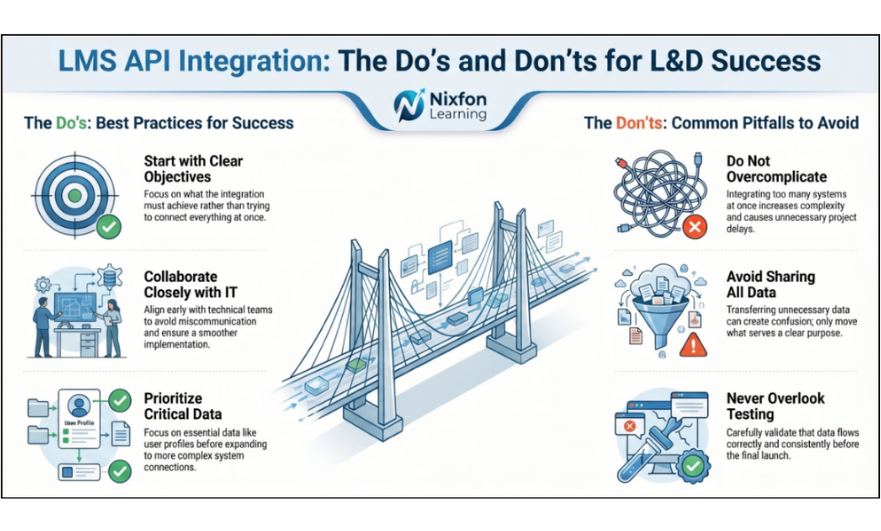
While API integration is powerful, it is not without limitations.
Not all systems integrate easily – some platforms may have limited API capabilities or require additional configuration.
Data mapping can be complex - different systems may use different formats or structures, which can require careful alignment.
Real-time integration may not always be necessary – in some cases, scheduled updates are more practical and sufficient.
Maintenance is ongoing – APIs may require updates when systems change or new requirements emerge.
Understanding these limitations may help organisations set realistic expectations and avoid unnecessary frustration during implementation.
A Bridge, Not a Barrier
API integration may initially seem like a technical concept, but at its core, it is simply about helping systems work together more effectively.
For L&D teams, the goal is not to master the technical details, but to understand how integration supports learning operations and learner experience. With clear requirements, thoughtful collaboration, and a focus on what truly matters, API integration becomes less of a barrier and more of a bridge.
And when that bridge is built well, the LMS quietly becomes part of a connected ecosystem that supports learning in a seamless and meaningful way.
Which, in many ways, is exactly what it was meant to do.
How Nixfon Learning Supports API Integration for L&D Teams
At Nixfon Learning, we understand that API integration can feel complex, especially for L&D teams whose primary focus is people and learning, not system architecture or data flows.
While the technical aspects are often managed by IT and platform specialists, the decisions behind integration such as what data flows, when it flows, and it matters have a direct impact on the learner experience and overall success of the LMS.
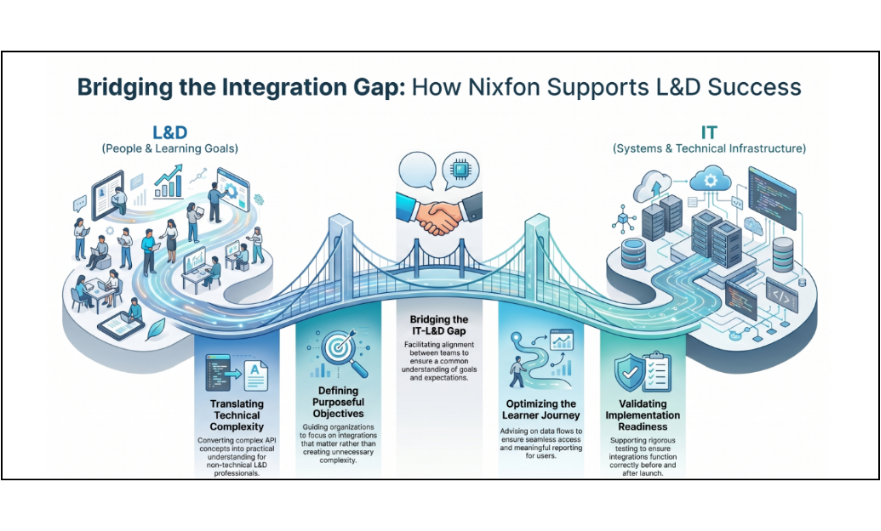
We recognise that integration is not just a technical milestone, but an important part of building a connected learning ecosystem.
At Nixfon Learning, we guide organisations through this process in a way that feels structured, manageable, and aligned with what matters most: creating a learning experience that works seamlessly for both the business and its people.
Till we meet again in the next episode!
About the author
Hazie Halim has more than 15 years of experience in Talent Management Solution and L&D Tech. Her approach has never been about the technology; it has always been about the people in the industry. She understands HR & L&D, she understands the pain and the stress, and she understands the fear and reluctance of system integration drama. Combining these has allowed her to be compassionate when sharing her experience and knowledge during project implementation. She is passionate about making the HR & L&D experts look good in front of their stakeholders. Their win is her win.


Unlock a world of thrilling content
Join our newsletter today
Resources


Unit 7.06, Level 7, Amcorp Trade Centre, 18, Persiaran Barat, 46050 Petaling Jaya, Selangor.
Nixfon (M) Sdn Bhd (633379-V)