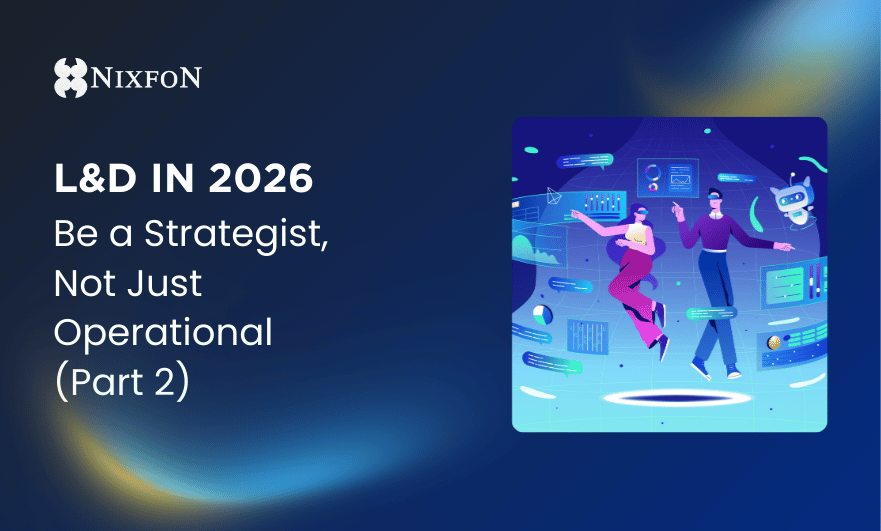
L&D in 2026 – Be a Strategist, Not Just Operational – Part 2
I hope my first post was intriguing enough for you to continue reading (you have no idea the sweat produced in the first post thank God for deodorant!).
Hazie Halim
2/5/20264 min read
I hope my first post was intriguing enough for you to continue reading (you have no idea the sweat produced in the first post thank God for deodorant!).
I posted some questions that I hope, could help push you into the direction of being a strategic partner to your organisation. This time, I would like to explore ideas and share experiences on how best to prepare you for the next step.
It has been almost 6 years since COVID-19 left us (I shudder to think time flies too fast these days). And since then, digital learning is popping everywhere, replacing the idea of traditional learning. In fact, we are now entering the era of Artificial Intelligence. Technology is growing rapidly by the hour that if we don’t do anything about it, the next time we blink, it will be too late to survive.
We have to admit, these changes are affecting our L&D. We can no longer say, why fix something that ain’t broken. We can no longer be complacent. As what Albert Einstein said once, “The world as we have created it, is a process of our thinking. It cannot be changed without changing our thinking.”
What worked once, is considered absurd these days by the younger generation. They couldn’t comprehend how the Gen-X was able to make friends without mobile devices in their hands. They couldn’t understand how the older generations were patience enough to wait for the new episode of their favourite series on a weekly basis.
The younger generation these days were born with the technology. At the age of 2 years old (some even earlier), they have already been fed with screen time. My niece even knew how to call her father using her mother’s phone, and she is only 4!
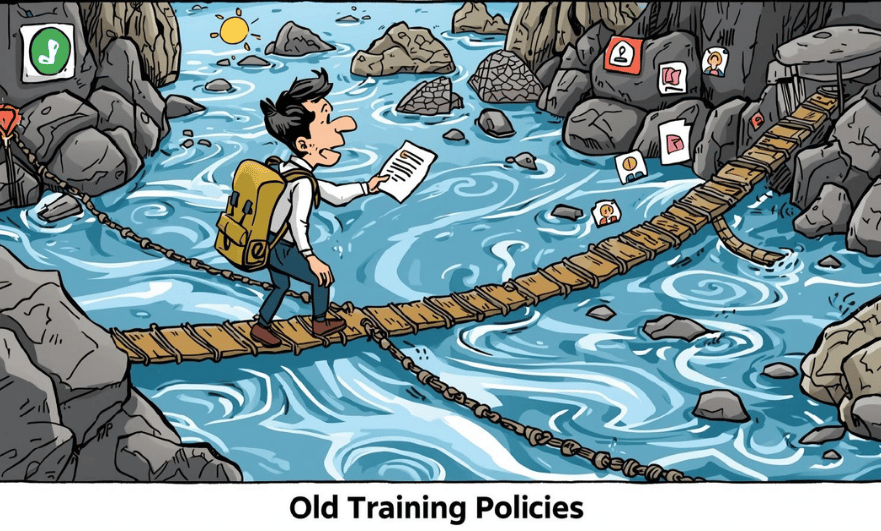
To move with technology, the L&D needs to take a bold move. Changing the training policy that has been in place since pre-COVID can be your courageous one. Here are some policy changes that are worth consideration:
Erase the tracking of learning hours and replace them with learning impact (knowing that the courses have positive impact to your employees’ needs is far greater than the hours taken to learn).
Remove the multiple layers of approval process and replace them with only one-level approval (provide ample e-learning courses so your employees do not have to ask for approval as they can learn at their pace. And your stakeholders can start focusing on what matters, the business!).
Rely on content library to provide you with thousands of e-learning courses that can help you with the curation of learning plans (with thousands of contents available in the content library, you can easily curate courses based on skill heatmap, department-based courses, even courses that can help meet the company’s objectives).
Only source out classroom courses that provide practical knowledge, so it can complement the e-learning courses (limit your costs by only paying for classroom courses that carry heavier weight, such as for IT department, sustainability, engineering, etc).
Create multiple course catalogs that allow the employees to search for relevant courses that meets their needs – upskill, reskill, etc (when you have already planned the courses for the new year and you have plenty of it, you can create multiple course catalogs for your employees to browse through and seek courses that meets their interests).
Create a community space so your employees can have a social learning with their peers, sharing ideas, knowledge, and experiences (we strive in Community that shares common interests. Provide your employees this safe space for them to strive together).
I sincerely hope you manage to read until here, because I know these changes are not easy to implement (I can hear that dragon breath coming from you). After all, growth is painful. Change is painful. But, as Maxime Lagacē once said, “Nothing is as painful as staying stuck somewhere you don’t belong.”
L&D now belongs in a strategic department. It is time for L&D to be that partner to the company in producing well skilled employees and at the same time, saving the company’s costs. I sincerely believe, that with your expertise and your willingness to make that change, you will be able to speak the language your stakeholders would understand – L&D ROI.
Till we meet again in the next episode!

About the author
Hazie Halim has more than 15 years of experience in Talent Management Solution and L&D Tech. Her approach has never been about the technology; it has always been about the people in the industry. She understands HR & L&D, she understands the pain and the stress, and she understands the fear and reluctance of system integration drama. Combining these has allowed her to be compassionate when sharing her experience and knowledge during project implementation. She is passionate about making the HR & L&D experts look good in front of their stakeholders. Their win is her win.


Unlock a world of thrilling content
Join our newsletter today
Resources


Unit 7.06, Level 7, Amcorp Trade Centre, 18, Persiaran Barat, 46050 Petaling Jaya, Selangor.
Nixfon (M) Sdn Bhd (633379-V)