L&D – Do we trust our employees to do their own learning?
This has always been an interesting subject whenever I get the chance to manage and implement a new project. From my observations, I realised that a lot of companies are still holding tight to their top-to-bottom enrolment. Employees are to learn what the company decides for them.
Hazie Halim
3/5/20264 min read
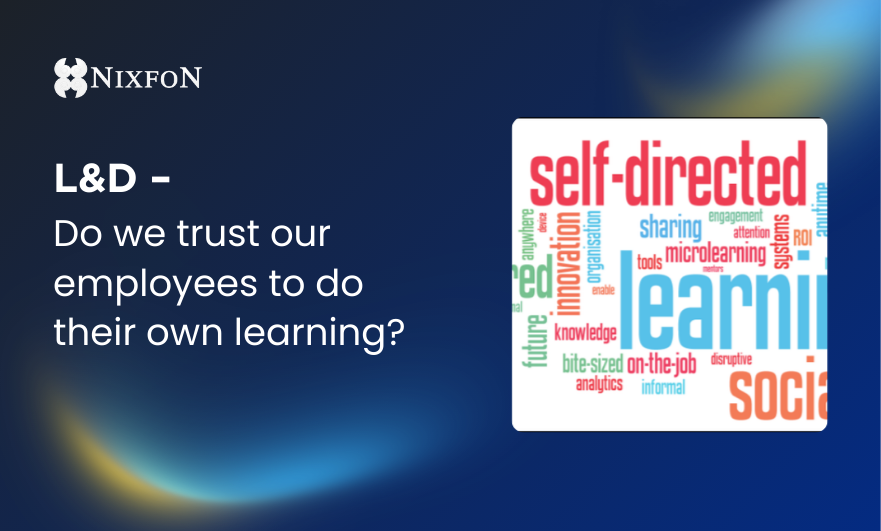
This has always been an interesting subject whenever I get the chance to manage and implement a new project. From my observations, I realised that a lot of companies are still holding tight to their top-to-bottom enrolment. Employees are to learn what the company decides for them. It must be based on the skills assessments result, and employees need to commit to bridge the gap.
And it is not wrong at all. It is a correct approach. Of course, when a position does not have the appropriate skill, the employee that is holding that position is responsible for rectifying it. Otherwise, what is the point of hiring and keeping them when they don’t want to improve themselves?
However, the top-to-bottom method is not the only method. Dictating what courses give value to the employees may not work for all. What you deem a course that carries the correct weight may seem inappropriate to an employee who thinks that course is on a beginner level for them. And what happens then? It demotivates the learners. Or worse, it does not give any impact at all because the employee takes them just for the sake of completing it.
Allowing self-learning encourages employees to boost innovation, adaptability, and performance by fostering pro-active problem solving, critical thinking, and specialised skills development, leading to greater engagement, satisfaction, and retention, while keeping the company competitive in a rapidly changing world. It empowers individuals to take ownership of their growth, matching learning to their specific needs and interests, making development more relevant and effective.
Benefits to Employees
Increased motivation & satisfaction – When there is a personalised learning path or even a space to browse through various course catalogs to self-enrol, your employees will feel empowered to grow their skills or even gain a new skill. Couple this with the gamification mechanics you have created will give them that extra boost to continue learning.
Enhanced skills & confidence – When you trust your employees to grow themselves, they develop diverse, specialised skills and the confidence to tackle challenges independently, leading to career growth.
Better work-life balance – When you allow flexibility in their development to fit daily routines, it gives a sense of control to your employees. Self-learning means they can take their learning anytime, anywhere.
Benefits to Organisation
Innovation & adaptability – When a company has a self-directed workforce, it can quickly adapt to change and generates new ideas, keeping the business ahead. When you have people that take their own initiatives, there is no longer a need to keep lending a helping hand or feeding spoons. So much time is saved!
Stronger performance – Pro-active, skilled employees are proven to be far more productive and better problem-solvers. When they have a space to self-enrol themselves to courses, they will start finding ways on how to solve problems within their work or even others.
Higher retention & engagement – When a company invests in employee growth, it reduces turnover and creates a more energetic environment. Training new employees every month is not just wasting time but increases costs too.
Future-proofing – When a company allows self-learning and provides plenty of choices of e-learning courses, you cultivate a culture of continuous learning, ensuring relevance as industries evolve.
Emerging leaders – When you empower employees to share knowledge, you are allowing natural leaders to emerge.
How It Works
Employee ownership – Enable the employees to choose what to learn and how, making it more engaging than mandated training. The freedom to choose will encourage learning, stress free.
Relevance – Focuses on skills directly applicable to current and future roles will increase knowledge retention. Prepare your employees with skills relevance to the business goals and industry needs.
Pro-active problem solving – Shifts from waiting for answers to seeking them out, building resilience. Employees that know they have the freedom to take own initiatives will flourish and will bring positive impact to the company.
Giving the freedom to the employees when it comes to learning is never a bad thing. It means you trust their judgment. It shows you are taking their growth seriously. And when an employee feels their growth is important, loyalty comes easily.
Till we meet in the next episode!
Here are some benefits of self-learning to the employees and to the organisation, and how it works:


About the author
Hazie Halim has more than 15 years of experience in Talent Management Solution and L&D Tech. Her approach has never been about the technology; it has always been about the people in the industry. She understands HR & L&D, she understands the pain and the stress, and she understands the fear and reluctance of system integration drama. Combining these has allowed her to be compassionate when sharing her experience and knowledge during project implementation. She is passionate about making the HR & L&D experts look good in front of their stakeholders. Their win is her win.


Unlock a world of thrilling content
Join our newsletter today
Resources

Unit 7.06, Level 7, Amcorp Trade Centre, 18, Persiaran Barat, 46050 Petaling Jaya, Selangor.
Nixfon (M) Sdn Bhd (633379-V)