L&D Adopting Storytelling
“Subject to section 7A, any term or condition of a contract of service or of an agreement, whether such contract or agreement….zzzz… was entered into…zzzz….snore.”
Hazie Halim
3/3/20263 min read
“Subject to section 7A, any term or condition of a contract of service or of an agreement, whether such contract or agreement….zzzz… was entered into…zzzz….snore.”
I can’t be the only one, right? Having to go through training materials that writes miles of this Acts and that Acts, like, who remembers this?
Compliance courses will have all these terms and policies that even though it is a legal requirement, it will not give any impact to your employees if they do not understand what they are consuming. This is where, becoming a storyteller is important for all L&D.
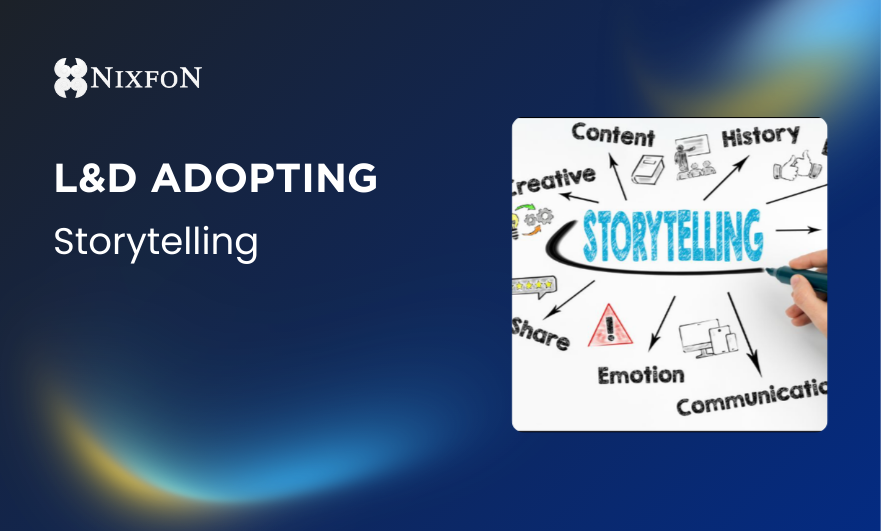
L&D can transform into storytellers by shifting from telling facts to showing scenarios, turning abstract compliance or training materials into relatable narratives that connect emotionally with employees. This approach increases engagement and can improve knowledge retention by at least 80%.
Instead of listing down all the possible Acts and policies in a compliance course, maybe you can start narrating the scenarios, applying a real-life situation that are relatable.
How L&D can Become a Storyteller
Create Relatable Characters and Conflicts – Develop protagonists that mirror the target audience (e.g., new hire or stressed manager) and place them in realistic situations, such as a data breach, a difficult client, or a compliance dilemma.
Follow a Narrative Arc – Structure a training with a beginning (context), a middle (building tension through challenges), and an end (resolution and key takeaways).
Use “Show, Don’t Tell” – Replace bullet-point presentations with video-based narratives, interactive branching scenarios, or role-playing simulations.
Leverage Personal Anecdotes and Micro-Narratives – Use real-life, honest stories – including mistakes and lessons-learned, to foster authenticity and trust.
Utilise “Homework for Life” – Encourage L&D professionals to document daily work moments to create a “bank” of stories that can be adapted for future training sessions.
Implement “Hero’s Journey” – Frame the learning experience as a journey where the employee is the “hero” facing challenges, finding mentors (the training), and gaining new skills.
How Storytelling Helps L&D & Learners
Enhances Retention and Memory – Stories act as memory aids, making technical or dry information easier to recall.
Fosters Emotional Connection and Empathy – Scientifically, stories trigger neurotransmitters like cortisol (focus) and oxytocin (empathy), which help employees connect with the material personally and understand the “why” behind policies.
Promotes Active Participation – Instead of passively reading, learners engage with the narrative, predicting outcomes and making decisions, which prepares them for real-world application.
Simplifies Complex Concepts – Difficult subjects (like regulatory compliance or new software) become more digestible and logical when broken down into a story format.
Drives Behaviour Change – By simulating consequences in a safe, fictional environment, storytelling influences attitudes and encourages better decision-making back on the job.
Storytelling is no longer belong to just Sales & Marketing department. It belongs to L&D too. So, instead of dumping heaps of onboarding documents (policies, handbooks, etc), why not allowing your new hire to explore a “gallery” of company history and values, through a narrative. Instead of forcing the compliance courses with all the acts and policies, follow a character navigating team conflict, or in a “what-ifs” scenarios and show the ripple effects of a small decision.
Till we meet again in the next episode!
Here is how L&D can become a storyteller and how it helps:


About the author
Hazie Halim has more than 15 years of experience in Talent Management Solution and L&D Tech. Her approach has never been about the technology; it has always been about the people in the industry. She understands HR & L&D, she understands the pain and the stress, and she understands the fear and reluctance of system integration drama. Combining these has allowed her to be compassionate when sharing her experience and knowledge during project implementation. She is passionate about making the HR & L&D experts look good in front of their stakeholders. Their win is her win.


Unlock a world of thrilling content
Join our newsletter today
Resources


Unit 7.06, Level 7, Amcorp Trade Centre, 18, Persiaran Barat, 46050 Petaling Jaya, Selangor.
Nixfon (M) Sdn Bhd (633379-V)