
Building a Coaching Culture (Beyond Programs)
A leadership program is launched. Managers attend a two-day workshop on coaching skills. They practice asking open-ended questions, listening actively, and guiding employees through thoughtful conversations. The energy is positive.
Hazie Halim
5/21/20264 min read
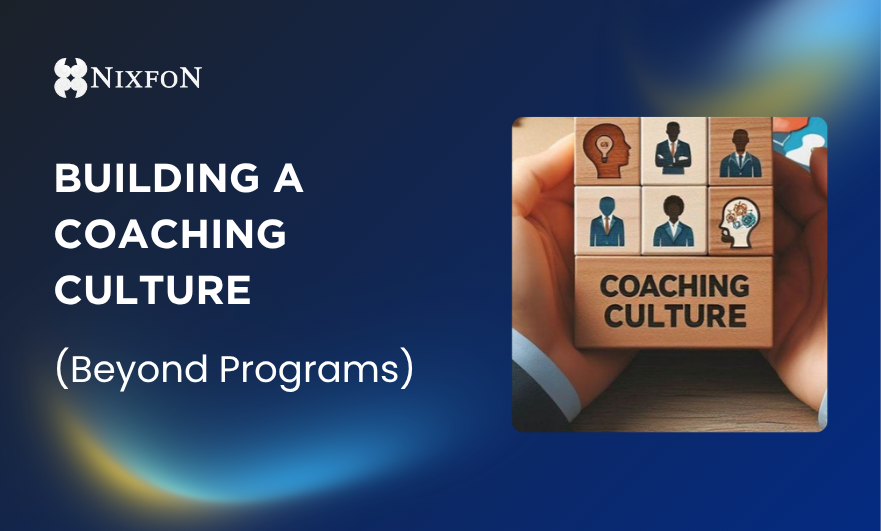
When Coaching Stops Being a Workshop and Starts Becoming a Habit
In many organisations, coaching begins with good intentions.
A leadership program is launched. Managers attend a two-day workshop on coaching skills. They practice asking open-ended questions, listening actively, and guiding employees through thoughtful conversations. The energy is positive.
But a few weeks later, daily work resumes its familiar rhythm. Meetings pile up. Targets demand attention. Deadlines tighten. Gradually, coaching conversations become less frequent. Not because managers do not value coaching, but because habits quietly return to old patterns.
This is where many organisations discover an important truth: a coaching culture cannot be created through programs alone. Workshops can introduce the concept, but culture emerges from consistent behaviour.
What a Coaching Culture Really Looks Like
A coaching culture is defined by the number of coaching programs delivered. It is reflected in everyday conversations.
Managers regularly ask questions that encourage reflection rather than immediately offering solutions. Employees feel comfortable discussing challenges without fear of judgment. Feedback becomes part of normal work interactions instead of something reserved for annual reviews.
In such environments, development does not depend solely on formal training sessions. It happens continuously through dialogue. This is where coaching becomes powerful: it transforms learning from an event into an ongoing relationship.
Training Managers to Coach Consistently
For many managers, coaching is unfamiliar territory. Most were promoted because of their technical expertise or operational performance. Coaching others may not have been part of their earlier career experience. Expecting them to coach effectively without support can be overwhelming.
Training still plays an important role, but its purpose should be practical and focused. Rather than covering broad leadership theories, coaching development should concentrate on simple behaviours that managers can apply immediately. For example:
Asking reflective questions instead of providing instant answers
Listening with curiosity rather than preparing the next response
Helping employees explore solutions before offering advice
Small shifts in conversation style can gradually build coaching confidence. Consistency matters more than complexity. When managers practice these behaviours regularly, coaching becomes less of a formal activity and more of a natural leadership approach.
Embedding Feedback Loops in Daily Work
A coaching culture also depends on regular feedback loops. Without feedback, learning stalls. Yet in many organisations, feedback still happens infrequently. Conversations about development are often limited to performance reviews or formal check-ins.
Embedding feedback into everyday work can make a significant difference. This might include:
Short reflection conversations after key projects
Team discussions about lessons learned
Peer feedback during collaborative work
These moments do not need to be lengthy. Even brief conversations can encourage growth when they are thoughtful and constructive.
The goal is to normalise feedback so that employees view it as support rather than evaluation. Over time, these feedback loops reinforce coaching behaviours and strengthen trust between managers and their teams.
Measuring Coaching Quality
One of the challenges organisations faces is understanding whether coaching is actually happening. Attendance in coaching workshops can be measured easily. Coaching behaviour, however, is less visible.
To understand coaching effectiveness, organisations can look at several indicators.
First, employee feedback provides valuable insight. Surveys or informal check-ins can explore whether employees feel supported in their development and whether managers engage in meaningful coaching conversations.
Second, leadership observations can highlight how managers approach problem-solving discussions with their teams. Are they guiding employees to think independently, or providing immediate solutions?
Third, broader organisational signals can also reflect coaching quality. Increased employee engagement, stronger internal mobility, and improved team collaboration often indicate that development conversations are happening more frequently.
Measuring coaching does not require complicated metrics. It requires attention to behavioural patterns.
The Strategic Value of Coaching Culture
When coaching becomes part of everyday leadership, organisations begin to see meaningful benefits. Employees feel more supported in their growth. Managers develop stronger relationships with their teams. Problem-solving becomes more collaborative, and learning becomes continuous rather than occasional.
For L&D professionals, supporting a coaching culture represents a strategic opportunity.
Instead of delivering isolated leadership programs, L&D can help shape how development conversations happen across the organisation.
This shift elevates the role of learning from training delivery to capability development.
Building a coaching culture takes time. It does not happen immediately after a workshop, and it rarely follows a perfectly designed framework. It grows gradually through everyday interactions. Through small conversations. Through moments where managers pause to ask thoughtful questions instead of offering immediate answers.
These moments may seem simple, but they accumulate over time. And eventually, the shape how people learn, collaborate, and grow together.
In the end, a coaching culture is not something an organisation launches. It is something people practice.
How Nixfon Learning Supports Building a Coaching Culture
At Nixfon Learning, we understand that building a coaching culture requires more than training managers. It requires creating an environment where coaching is continuously practiced, reinforced, and supported through the right systems and structures.
With the support of Docebo LMS, we help organisations move beyond one-time programs and embed coaching into everyday work. Our approach includes:
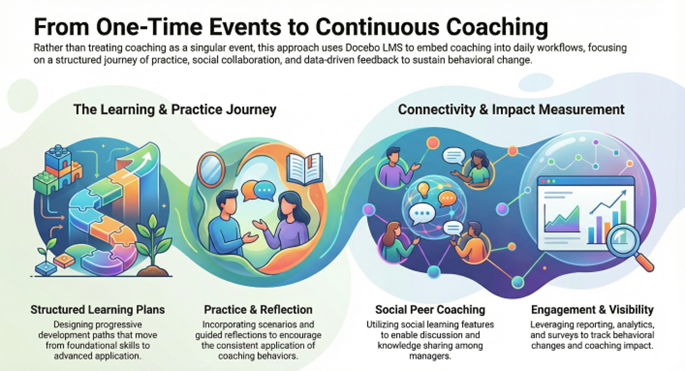
We recognise that a coaching culture is built through small, consistent actions supported by the right environment.
At Nixfon Learning, we combine thoughtful strategy with Docebo’s platform capabilities to help organisations turn coaching from a concept into a daily practice, where development conversations happen naturally and continuously across teams.
Till we meet again in the next episode!
About the author
Hazie Halim has more than 15 years of experience in Talent Management Solution and L&D Tech. Her approach has never been about the technology; it has always been about the people in the industry. She understands HR & L&D, she understands the pain and the stress, and she understands the fear and reluctance of system integration drama. Combining these has allowed her to be compassionate when sharing her experience and knowledge during project implementation. She is passionate about making the HR & L&D experts look good in front of their stakeholders. Their win is her win.


Unlock a world of thrilling content
Join our newsletter today
Resources


Unit 7.06, Level 7, Amcorp Trade Centre, 18, Persiaran Barat, 46050 Petaling Jaya, Selangor.
Nixfon (M) Sdn Bhd (633379-V)